Thursday, September 24, 2015

Week of September 24

Thursday Thoughts September 24


The highlight of my week was my visit to the Ron Clark Academy (RCA).  Yes it is a beautiful facility.  Yes the teaching staff is energetic and yes you leave there feeling like you can right all of the wrongs within the education system.  But when the dust settled and I reflected on everything that I observed, I realized that my biggest take away is understanding the impact that a caring adult can have in a child's life.  The students that attend the RCA are from all walks of life.  They are not all poor, they are not all black and they are not all low performers.  They are a mixture of children whose parents want the best education possible for them.  Like our Medlock students, they have a variety of different ability levels and the teachers are using every strategy imaginable when working with them.  It was evident that the teachers love and respect the students.  They believe that EVERY child will be successful and this is evident in their interactions with the students.  When Ron Clark was speaking, he emphasized that education is about passion, high expectations and relationships.  Before we can ask a child to believe in himself, we have to believe in him. 


Feel free to watch the 5 minute clip about RCA.  Yes I did slide down the blue slide!  https://www.youtube.com/watch?v=w5SBsk3rS6s&feature=player_embedded


Staff Spotlight

This week I would like to shine the spotlight on our Speech Language Pathologists (SLPs)  Bri Necessary and Michelle Penn.  These ladies have been working hard to meet the needs of our students who receive speech services.  For years, we were staffed with at least two K-5 Speech teachers and one for Pre K.  This year, Bri and Michelle are serving all of our identified students.  I continually see these ladies in the classrooms working alongside the teachers.  In addition, there are students who are enrolled in private school and we are required to provide speech services to them as well.  In a school, it can sometimes be difficult to think of other areas or departments outside of our own.  We have a significant Special Education department at Medlock and the Speech-Language Program is an integral part of that department.  I am thankful for the work that these ladies are doing and I know that it often goes unrecognized.  Bri and Michelle, thank you for what you are doing for our students.


Personalized Learning

6 Strategies to Truly Personalize PBL

By Andrew Miller
 

Thursday, September 17, 2015

Week of September 17


Thursday Thoughts September 17


Perseverance is a character trait that we, as adults, are always striving to improve. Things get tough and we tend to give up or settle for mediocrity.   It is also hard to teach this trait to children.  I would argue that as parents, we sometimes find it easier to let our children "off the hook" rather than help them see something through to the best outcome possible.  Maybe we don't want to deal with the push back or maybe we just know which battles are worth fighting.  Either way, this is a constant struggle for many.   As teachers we can certainly foster an environment of perseverance within our classrooms.  
 
This evening, my son came home with an essay that I helped him edit a few weeks ago.  He made an 83 B.  In my estimation, this was a pretty good grade for his first essay in this 11th grade Honors Lit  class.  I congratulated him and told him that I was proud.  To my surprise he said, "Mom it gets better!"   "The teacher said if we revise it again, we could get up to ten additional points."  He was excited about this opportunity and thus I got excited.  As a parent, I was ready to have him settle for the 83.  It didn't even cross my mind to have him ask for another chance.   As an educator, I understand and am grateful that the teacher is giving him the chance to persevere and make improvements.  What second chances can you give students to encourage them to persevere?


Staff Spotlight

This week I would like to shine the spotlight on Dorian (Scheuch) Gower.  Dorian is not only the grade chair for 4th grade, but she has stepped up in a number of ways and is leading by example.  She now serves on the School Governance Council and volunteered to serve as the Vice Chair of the Council.  She is also increasing her knowledge of technology use by participating in the Nearpod Cohort.  Dorian is working closely with Mrs. Arango to help her navigate through the maze of  "must dos" here at Medlock.  The 4th grade team is working hard to support all students and I am thankful to have Dorian advocating for the students and her team.


Personalized Learning


Beyond Q+A: Six Strategies That Motivate ALL Students to Participate


Do you have students who rarely raise their hand when you ask a question? When I think back about kids in my classroom who didn't participate at first, I remember Jared and Maya (whose names I changed). Jared was polite, listened to his classmates, and did his homework. But when I asked questions or set up class discussions, Jared remained silent. Maya was really creative and an avid reader. She also didn't participate, frequently had her head down in class, and was reluctant to start work. Some of our students might sit quietly through each lesson or be visibly disengaged. Maybe they don't understand the lesson, are embarrassed, or hesitantly wait for another peer to share. Jared and Maya certainly aren't unique.
I often visit classrooms where I see teachers employ lots of Q+A. Asking questions and calling on raised hands is one way to check for understanding. But Q+A doesn't access 100% of our kids -- especially not kids like Jared or Maya.
How can we get our shiest students, or even our student with her head down in the back of our class, participating? While cold calling, randomizers or pulling a Popsicle stick will ensure students are equally called upon, some students find that approach frightening or annoying. Below are strategies you can try in your class tomorrow that will motivate your Jareds and Mayas to participate.

1. Three Seconds

According to researcher Mary Budd Rowe, the average teacher waits 1.5 seconds between asking a question and calling on a student. By increasing the wait time to a mere three seconds, the following occurs:
  • Accuracy increases
  • "I don’t know" decreases
  • Student responses get longer
  • Achievement on tests increases
  • More students participate
I literally count at least three Mississippis in my head after asking each question.

2. Hand Out Questions in Advance

Pre-plan a few questions that you want to ask (Saphier and Haley, 1993), write them on slips, and hand each student one question at the beginning of class. Once it’s time to ask the question, reach out first to the kids who had the question, then to the rest of the class. Try dividing the class into the groups whose members had the same question so that they have a chance to chat first before sharing out.

3. Anonymous Questioning

Companies like Socrative and Infuse Learning have designed software to check for understanding that can be accessed via smartphone, tablet or laptop. You can incorporate all types of questions from multiple-choice to short answers, and responses can be anonymously represented via graph. You can then make informed decisions with rapid, real-time data. Kids love it because they get to use technology, feel safe and get immediate feedback.

4. Choice Questions

It's important to incorporate questions that have more than one right answer, but broad, open-ended questions can be debilitating. Try incorporating some choices or either/or questions.
  • Instead of asking, "How are you going to solve today's equation?", try "Would you rather use the simplify or guess-and-check method for today's equation?"
  • Instead of asking, "Which character exemplifies what it means to be a friend?", try "Would Charlotte or Wilbur make a better friend? Why?"

5. Snowball to Avalanche

In Reading Without Limits, I share a fun kinesthetic strategy:
Have a really debatable question? Start the discussion. When a student answers, they become a "snowflake." As students agree with the original student, they move their bodies closer to that student to "build on that snowflake,"’ making a snowball. If you choose a great question, there should be several snowballs throughout the room that eventually, if one side is more convincing, turn into an avalanche. Kids will love showing allegiance to their classmates' ideas. And they can definitely change their minds.
As kids show their allegiance, call on different kids to share out why they are taking that particular stand.

6. Estimation Line-Ups

Ask kids a question that has a numerical response based on a sliding scale (Kagan, 1994). Place a number line around your classroom walls. Students stand under their number/answer preparing to share why. Fold the line in half so the students who most strongly disagreed with each other now chat before sharing out to the whole class.
  • "Our scientific hypothesis is that a plant will grow more near the window than in the closet. How many more inches do you think the plant near the window will grow compared to the one in the closet?"
  • "On a scale of 1-5, 5 being 'strongly agree,' 1 being 'strongly disagree,' should Jack and the boys take Piggy's glasses?"
Traditional Q+A didn't help me access all of my learners. The above strategies increased participation in my classroom, giving me more opportunity to check and support understanding. Getting our Mayas and Jareds to develop the confidence and comfort to participate makes a classroom a true learning community that values all, not just some students' thoughts.
Habitudes- (Growth Mindset)


Looking Ahead

Georgia Department of Education offering increased flexibility in TKES implementation

MEDIA CONTACT: Matt Cardoza, GaDOE Communications Office, (404) 651-7358, mcardoza@gadoe.org

-Follow us on Twitter, Facebook, and Instagram

September 11, 2015In response to the concerns of teachers and school leaders, the Georgia Department of Education is working to allow modified implementation of the Teacher Keys Effectiveness System, beginning with a pilot in selected districts this year. Information from the 2015-2016 pilot will assist the GaDOE moving forward to expand modified implementation to all districts.
In plain language, modified implementation means tha
t six observations will not be required for all teachers, allowing for a more personalized approach to evaluating teachers. Highly effective teachers are eligible to receive fewer observations, while new or ineffective teachers will receive the standard six. 
“There has been a call from school-level
leaders all over Georgia to reduce the administrative burden resulting from the Teacher Keys Effectiveness System,” State School Superintendent Richard Woods said. “I could not agree more with their concerns. One-size-fits-all doesn’t work for our teachers, any more than it does for our students. A tiered observation system, which we will pilot in selected districts this year, will free up time for administrators to focus on improving the instruction of the school’s teachers that need the most attention.”


The following school districts will participate in the 2015-16 modified implementation pilot:

Ben Hill County

Cherokee County

Clayton County

Griffin-Spalding County

Peach County

White County

These districts represent high schools, middle schools, elementary schools, and charter schools in urban, suburban, and rural areas throughout Georgia.​

Thursday, September 10, 2015

Week of September 10

Thursday Thoughts September 10


Today is World Suicide Prevention Day.  Although this is not a subject that we focus on in elementary school, it is one that we shouldn't ignore.  In middle and high schools throughout the country and right here in our community, young people are facing challenges and pressure to live up to certain expectations.  This can sometimes leave them with a sense of hopelessness. In fact, as adults, we too have to be mindful of how we deal with the stress of the job, family and life in general.  According to the IASP (International Association for Suicide Prevention), doing things such as showing care and concern and listening to others in a non-judgmental way can have a significant impact on others.  Fulton County High Schools are observing Suicide Prevention Week next week.  In fact, this weekend the 5th Annual Teen Music Festival, WILLSTOCK, will take place at Northview H.S.  This event is dedicated to increasing love, hope and the "Will to Live" of teens everywhere.  If you are not familiar with the Trautwein Family and the amazing work that they do to honor their son's memory and affect the lives of young people, please visit their website http://will-to-live.org/.


Staff Spotlight

This week I would like to shine the spotlight on Poonam Bhavinani.   Many of you don't know that FCS has restructured the IT Department and our school techs are now district techs.  We are fortunate to have Poonam housed with us at Medlock where we can ask her to help us at the drop of a dime.  But this will no longer be the norm.  Poonam has been working double time to get our school technology up and running, assisting other schools with their technology needs and helping new techs figure out what they should be doing.  If you are like me, you would much rather ask Poonam to "fix it" without the need to submit a HEAT ticket.    She works hard to get other district IT personnel to come to our aide and even when they come out, she is generally the person that will have to keep working on the problem long after they leave.  As we prepare to roll out classroom devices, I know that we will face additional challenges so I am thankful that Poonam will be with us to hold our hands. 


Personalized Learning

15 Common Mistakes Teachers Make Teaching With Technology

,   by ,                   

mistakes-teaching-with-technology


The role of technology in learning isn’t entirely clear–or rather, is subjective.
While it clearly is able to provide access to peers, audiences, resources, and data, it also can be awkward, problematic, distracting, performing more strongly as a barrier to understand than anything else. Why this happens also isn’t clear, but there are some common patterns and missteps to look for while designing or evaluating a learning process.

15 Common Mistakes Teachers Make Teaching With Technology
1. The teacher is choosing the technology.
It’s not always possible, but when you can, let the students choose, and see what happens. Not all of them will be able to. Some need help; so let other students help them.
2. The teacher is choosing the function.
This doesn’t mean you can’t choose the function, but if you students can’t control the technology the use nor its function, this can be problematic: the learning is passive from the beginning.
3. The teacher is determining the process.
To an extent you have to, but don’t overdo it.
4. The technology is distracting.
If the technology is more magical than the project, product, collaboration, process, or content itself, try to muffle the bells and whistles. Or use them to your advantage.
5. The technology isn’t necessary.
You wouldn’t use a ruler to teach expository writing, nor would you use a Wendell Berry essay to teach about the Water Cycle. No need for a Khan Academy account and a fully-personalized and potentially self-directed proficiency chart of mathematical concepts just to show a 3 minute video on the number line.
6. The process is too complex.
Keep it simple. Fewer moving parts = greater precision. And less to go wrong.
7. Students have access to too much.
What materials, models, peer groups, or related content do students actually need? See #6.
8. The teacher is the judge, jury, and executioner.
Get out of the way. You’re (probably) less interesting than the content, experts, and communities (if you’re doing it right).
9. They artificially limiting the scale.
Technology connects everything to everything. Use this to the advantage of the students!
10. They’re not limiting the scale.
However, giving students the keys to the universe with no framework, plan, boundaries or even vague goals is equally problematic.
11. Students access is limited to too little.
The opposite of too board a scale is too little–akin to taking students to the ocean to fish but squaring off a 5 square feet section in the middle of the Pacific to operate.
12. The transition between technology and non-technology is clumsy.
“Okay students, stop searching global databases to identify the most relevant and compelling digital media resources for your project-based learning artifact. Have a seat and let’s all do a KWL chart together so we have something to hang on the wall.”
13. They think forward, not backwards.
Begin with the end in mind. Where do you want to be at the end of the lesson or activity? What sort of evidence does it make sense to accept as proof students “get it”? Start here, and move step-by-step backwards through the learning process. You can choose tech-first, but you have to be careful.
14. Technology is functioning as an end, not a means.
This is similar to #5. Learning technology is flashy.
15. It’s not cloud-based but it needs to be.
Designing a project-based learning unit that could allow student access to peers, assignments, and content and then limiting it to a school server, offline folders, disparate flash drives, or even disconnected social media platforms (one assignment on Edmodo, another piece on G+ Communities, etc.) is the quickest way to turn a 4 week unit into an 8 week unit.

This post has been updated from a 2012 post; 15 Common Mistakes Teachers Make Teaching With Technology

Habitudes- (Growth Mindset)


Looking Ahead

Space Standards for Educational Facilities Community Dialogue

"To build the schools of tomorrow, we need you today"
Over the past several months, district staff has engaged teachers, principals, parents, and community members in an effort to revise the standards we use when designing new schools and renovating older schools. This effort is the first step in developing a 2017 – 2022 capital plan.

In mid-September, the Fulton County Schools will host several community dialogues to gather feedback on design options for education facilities.
  • Monday, September 14, 6:45 pm - Sandtown MS (South)
  • Monday, September 14, 7:00 pm – Milton HS (Northwest)
  • Tuesday, September 15, 7:00 pm - Chattahoochee HS (Northeast)
  • Tuesday, September 15, 6:30 pm – Paul D. West (Central)
  • Wednesday, September 16, 7:00 pm – Roswell HS (Northwest)
  • Wednesday, September 16, 6:30 pm – Dunwoody Springs ES (Central)
The purpose of these meetings are to gain the communities feedback on revisions to these standards as well as their thoughts about how to create facilities that support a personalized learning environment for the 21st century.
All parents, teachers, students, business owners and community members are encouraged to participate. District staff will be in attendance. The sessions will be led by our consultants on this effort, DeJong-Richter.
For more information please contact Tiffany C. Martin (martintc@fultonschools.org) or Susan Simpson (simpsonsl@fultonschools.org).​

Thursday, September 3, 2015

Week of September 3

Thursday Thoughts September 3


The past 19 days of school have been a whirlwind.  In fact, I have noticed that when I get home each evening, I am scarfing down my food and rushing to take a shower so that I can get back on my laptop to do more work (if I can even stay awake).  I know you can relate.  Well, enough is enough!  We have packed ALOT into the first few weeks of school and we need a break.  It is my hope that you are able to refresh and rejuvenate over the long weekend.  I can't promise that things will slow down when we return, but if we STOP for just a couple of days, we can muster up enough energy to get through September.  Enjoy the long weekend!!


Staff Spotlight

This week I would like to shine the spotlight on Kim Richards. Kim joined Medlock this year and has a very tall order to fill.  There is no official job description for her position and she truly has to create her own value within our school.  In just a few short weeks, Kim has jumped right in with each grade level to serve as a planner, guide, demonstrator and advocate for PBL.  The website that she is creating will house the grade level PBL units and serve as a resource for teachers, students and parents alike.   Kim, thank you for the work that you are doing for the teachers and students.  We are excited about this work and know that we will learn a lot this year!


Personalized Learning


Habitudes- (Growth Mindset)
 
Looking Ahead

Congratulations Medlock Personalized Learning Team!

Congratulations to Craig, Leigh and Tanis, our Personalized Learning Team, on a job well done.  Our comprehensive ten page PL instructional model (that they worked on all summer) was approved by our area superintendent yesterday with no adjustments necessary.  This is a huge victory in our quest toward acquiring devices.  

Thursday, August 27, 2015

Week of August 27

Thursday Thoughts August 27


My message in today's blog is primarily a reminder for myself.  If the message will help you too, then great! However, I REALLY have to step back and think about a few things.  First, we are just completing our third week of school.  That's it!  We are only 14 days into the school year.   Yes I wanted the shelving in the Science Force lab to be completed (or started) by now; and yes I wanted to have all of the placement and scheduling kinks worked out with our classes; and of course I wanted to have our digital content in place so that we could begin using it immediately .  But the reality is that I have to work with the present situation.  I could focus on the things that are not yet where I want them or I can focus on the things that are working out in spite of the challenges. My goal is to do the latter. I know that patience is a virtue so I will keep striving to get there.  If this is area is a strong suite for you, I welcome you to hold a session for those of us still working on it.  But please.....hurry up!


Staff Spotlight

This week I would like to shine the spotlight on Tiffany Moss.  Tiffany exemplifies adaptability and perseverance.  Last year, Tiffany was hired after the 10 day count for 3rd grade and had only a couple of days to open her classroom and begin teaching students.  I am sure that she never anticipated starting this year in an even worse position than last year.  Tiffany started this year in 4th grade and as of last Friday, had to begin the painstaking process of collapsing her 4th grade classroom, saying goodbye to her students and relocating her room set up to 2nd grade (in the exact same room that she had last year).  This is not an ideal situation for anyone, but can be especially discouraging to a new teacher.  I must say that Tiffany has maintained a remarkably positive attitude and has remained focus on doing what is best for students.  Tiffany, we thank you for your dedication to students and your patience with us and the process.   Although it got off to a rocky start,  I hope you have a phenomenal school year!


Personalized Learning

5 Ways of Bringing Student Passions to Student Learning


Exciting classes interest students. These classes spark their curiosity. Sometimes, the learning here feels like play. A school may not be able to use these exciting ideas everywhere, but they should be used somewhere. If a school can't be interested in things that students care about, students will lose interest in caring about school.
 
 
Curiosity, Passion, and Making a Difference
Here are five current practices to promote student curiosity, student interests, and play.

1. Unleash Student Involvement: Turn Any Project Into a Passion Project

Look at Ronald J. Bonsetter's "Inquiry as an Evolutionary Process" chart below. See how student-led inquiry gives students more of a decision-making role in the project?
Some teachers are afraid that, by giving students too much freedom, they won't meet standards. First, share the standards with your students. Second, let students propose an inquiry-based project to meet the standards. This empowers student choice.
Teachers will need to engage with students. Students will need coaching. They'll need advice as they create their final product. Rubrics can help them stay on track, but teacher involvement is essential.
All projects are not alike. A teacher-directed, hands-on project can be as unexciting as an old-fashioned worksheet. Passion projects inspire curiosity and interest while still meeting standards.

2. Make Time to Create: Schedule Genius Hour, 20 Percent Time

Many classroom best practices are circulating around Genius Hour and 20 Percent Time. In my classroom, I've learned to give students choices and help them set goals. By using a tool like Trello, I'm able to coach and track student work.
Don't have an hour? There are other ways to foster a time to create and innovate. Some schools have puzzles or tools laid out in a certain place and change them out each week. Others issue a design challenge and let students invent ways to meet the challenge.
I've found that great Genius Hour work revolves around problem solving or creating. Genius Hour is not recess or free play. It can help students reflect, incorporate the scientific method, provide materials and tools to spark creativity, and deliver an audience for finished student work.

 
3. Supply Creation and Innovation: Create a Makerspace or FabLab

Some libraries are putting a makerspace in their learning commons. STEM labs, STEAM labs, and FabLabs are other ways to create places for making. Other schools have classes around making, robotics, or design challenges.
In my opinion, every school board and parent should be asking these three questions:
  1. Where is the makerspace in this school?
  2. Who has access?
  3. How often?
A well-used makerspace means that students are inventing and creating. A makerspace might be in a corner or in a full classroom, but it should be somewhere.

4. Spark Technology Innovation: Create an Online Student Makerspace

Let's discuss the ignored place for a makerspace: online. Why do teachers neglect one of the easiest places to create a makerspace? An online makerspace can be a web page, blog post, shared document, or anywhere.
As you assemble this virtual creativity destination, include tools and apps to complete various projects by category, such as image editing, presentation, collaboration, drawing, cartooning -- you name it. Students and teachers might not be using these tools yet because they don't know what's available. You can change that by sharing the makerspace with everyone.
A great way to start assembling your online makerspace is to have students do it. They can research different tools, test them, and add the ones that they think will work in this online environment.
Tip: When assigning a project, never require a specific tool (unless you're teaching it). Instead, tell your students, "Create the multimedia artifact of your choice" or "Create a spreadsheet in the software of your choice."

5. Know Your Students: Empower Student Interests and Dreams

Help students be social entrepreneurs. Help them map their heartbreak. Join the #choose2matter movement and connect your classroom with other students who want to make a difference in the world. Survey your students' interests at the beginning of the year. Create projects where they share their dreams with you and the class.
The better you know your students, the better you'll know how to teach them.

Turning Excitement Into Action

Want your students excited about learning? Then become excited about your students. Here's how we can share and direct their excitement:
  • We can know our students' interests and passions.
  • We can convert projects into passion projects.
  • We can schedule times to create.
  • We can provide physical and online tools to create.
When you include students in learning, you can meet standards, but you can also meet more excited students at your door every morning.

Habitudes- (Growth Mindset)


Looking Ahead
UPDATE ON MILESTONES SCORE RESULTS


 On September 3, preliminary state level results will be publicDistrict and school level results, including individual student reports, will become available in mid- to late-October.  The first wave of reports will be electronic, followed by paper.  Prior to the release of district and school reports, as well as the final state-level results, two important things will occur.  An independent third party will complete a forensic analysis of the Spring 2015 EOG data to investigate the impact of the online interruptions experienced by some students.  Additionally, a mode comparability study will be completed to ensure students were neither advantaged or disadvantaged by their mode of administration (paper/pencil or online).

Georgia Milestones will include four achievement levels:  Beginning Learner, Developing Learner, Proficient Learner, and Distinguished Learner.  The Proficient Learner will signal college and career readiness (or that the student is on track for college and career readiness).  The Developing Learner signals that the student has partial proficiency and will need additional support to ensure success at the next grade level or course.

Georgia Milestones represents a significant change and opportunity for our state. The 2014 – 2015 results will set a new baseline. 


Thursday, August 20, 2015

Week of August 20

Thursday Thoughts August 20


Well it is the ninth day of school.  Most of you know that the first ten days can keep a principal on edge, especially if our enrollment is very high or too low.  We anticipated opening a second grade classroom after the tenth day and we will open it.  We had hoped to keep the other grade levels fairly stable but we will have to reduce a class in 4th grade.   Tomorrow is the official tenth day so we can always hope to get a dozen or so kids to grace our doors (wishful thinking...I know). We will spend the day tomorrow making phone calls, so we ask that you please allow us to do so before sharing the news.  As educators, we find ourselves making lemonade more and more (figuratively speaking of course).  I think that Medlock Bridge squeezes every lemon to make the best lemonade around.  Thank you for the great work that you have done these first two weeks of school.


Staff Spotlight

This week I would like to shine the spotlight on Elizabeth Lumpkin.  Elizabeth was hired to assist Mrs. Padgett in Special Needs Pre K, however she has been been pulled hither and yon to help us meet the needs of many students over these past two weeks.  Elizabeth hardly had the chance to learn her way around before being asked to pick up and drop off students in various locations throughout the building.  She has done everything with a smile and several staff members have mentioned how wonderful she has been.  We know it's hard to be hired for one area and have to jump right into many other responsibilities.   Elizabeth we appreciate your willingness to pinch hit where needed.  Welcome to the MBES Family!!

Personalized Learning

A Simple Way To Clarify Personalized Learning
,


personalized-learning
Personalized learning is a term that’s becoming increasingly common as education becomes more ambitious and self-aware, moving away from whole class sit-and-get towards a model where new tools (e.g., apps and learning simulations) and new thinking (e.g., blended learning and game-based learning) are used to craft learning experiences that actually fill an existing need.

The fact that as educators we have to shift our perspective to make sense of this is interesting.
Quick story–I’m an old man, so my lower back hurts. I recently sought out a chiropractor to help me run/jump/lift the way I could even five years ago. After taking X-rays and reviewing film from a recent MRI, they created a routine of exercises for me, and for 4 weeks I went in 3 days a week to complete this routine, along with a handful of other treatments.
The unsettling thing for me was that no one was extracting new data–no new information, range of motion, pain thresholds, examine results, or other nuggets that could then be used to modify and personalize the more general treatment plan. As I looked around, the overlap of the course of treatment between myself and the patients around me was about 90%.
We did almost the same things, the same ways, for the same amount of time, in the same order when beyond a universal need for core strength, there is little chance that our bodies, injuries, and overall needs were so similar.
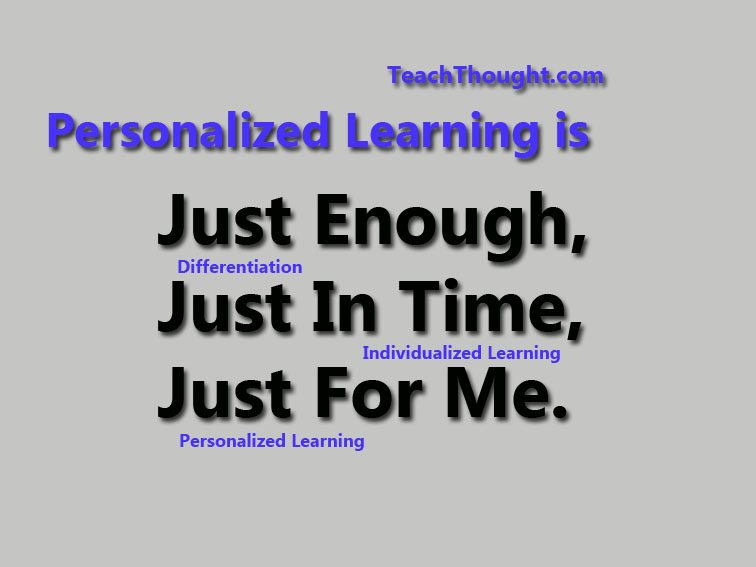
“Just in time, just enough, and just for me” is an easy way to articulate the concept of differentiation/personalization of learning, much in the same way “Show me, help me, let me” captures the spirit of the Gradual Release of Responsibility model so well.
If we could just be as insulted by whole class direct instruction (supplemented with only brief, minor attempts at truly personalized learning) as I am when I receive the same in a chiropractor’s office.

Habitudes- (Growth Mindset)


Looking Ahead

The top three print resources for the new Math textbooks are listed below and are available to be reviewed by the local school level and public from August 21 – September 21, 2015.


Listed below are the titles for review:

Houghton Mifflin Harcourt
Grades K-8
  • Dixon, J., Larson, M., Leiva, M. & Adams, T. L. (2015). Go Math!: Teacher Edition with Solutions Key Grade K (Vols. 1-2). Orlando, Florida: Houghton Mifflin Harcourt Publishing Company.
McGraw-Hill
Grades K-5
  • Carter, J., Cuevas, G., Day, R., & Malloy, C. (2014). My Math: Grade K-5 Teacher Edition. Bothwell, WA: McGraw-Hill Companies.
Grades 6-8
  • Carter, J., Day, R., Cuevas, G., & Malloy, C. (2013). Glencoe Math: Course 1-3 Teacher Edition. Bothwell, WA: McGraw-Hill Companies.
Pearson

Grades K-6
  • Bay-Williams, J.M., Berry, R.Q., Caldwell, J.H., Champagne, Z., Charles, R., & Copley, J. (2016). enVision Math 2.0: Grade 3 Teacher's Edition. Boston, MA: Pearson Education.
Grades 7-8
  • Fennell, F., Milou, E., & Schielack, J. (2015). Digits: Grade 7 Teacher's Edition. Boston, MA: Pearson Education.
Displays with print and digital resources will be displayed for teacher and public review from August 21 – September 21, 2015, at the following locations.

North Locations
  • Administrative Center (6201 Powers Ferry Rd, NW, Atlanta, GA 30339)
  • Crabapple Crossing ES (12775 Birmingham Highway, Milton 30004)
  • Northridge Learning Center (450 Northridge Parkway, Sandy Springs, GA 30350)
  • Creekview ES (3995 Webb Bridge Road, Alpharetta 30005)
  • Hillside ES (9250 Scott Road, Roswell 30076)
  • Wilson Creek ES (6115 Wilson Road, Johns Creek 30097)
  • Sweet Apple ES (12025 Etris Road, Roswell 30075)
South Locations
  • Asa G. Hilliard ES (3353 Mount Olive Road., East Point, GA 30344)
  • Feldwood ES (5790 Feldwood Road, College Park, GA 30349)
  • Tri-Cities HS (2575 Harris Street, East Point, GA 30344)
  • Sandtown MS (5400 Campbellton Road, Atlanta 30331)
  • E. C. West ES (7040 Rivertown Road, Fairburn 30213)
  • Stonewall Tell ES (3310 Stonewall Tell Road, College Park 30349)
Feedback from parents will be gathered through an electronic survey which may be completed on a school computer or on a smart phone.

Thursday, August 13, 2015

Week of August 13

Thursday Thoughts August 13


Well our first week is down and we only have 35 more to go...lol. Just kidding!!  I don't want to start the countdown just yet.   It has truly been a great week and I hope that you have taken the time to enjoy getting to know your students.  As I visited the classrooms, I was amazed to see how quickly the boys and girls were learning the routines, following directions and ready to get to work.  I am excited about this school year and the phenomenal things that are in store for our students.   As we begin the shift in how we instruct children, please know that we will run into road blocks, have times of doubt and even get frustrated with the process.  All of this is okay.  We don't have to have all of the answers or do everything perfectly.  We just have to put one foot in front of the other everyday, be willing to try new things and give our very best to EVERY child. 

Staff Spotlight 

This week I would like to shine the spotlight on Ingrid Parham.  Ingrid, our IST, has been working diligently to ensure that all of our special education teachers have the support that they need.  We have several students who are new to Medlock and she has been reviewing IEPs, meeting with teachers, calling parents, calling former schools and trying to get our students squared away.  Ingrid has even initiated  monthly Autism Cohort meetings for the AU teachers at Medlock Bridge and Findley Oaks. Often Ingrid is caught between the district demands and the needs and wants of our school.  I thank Ingrid for her desire to support our teachers and her dedication to our students.


Personalized Learning

Blended Learning: Behind the Scenes

 Heather Wolpert-Gawron   Edutopia October 22, 2012 

It feels like we're on the precipice of a more common, universal implementation for blended learning, but for a while still, blended learning is still dependent on teachers knowing what to teach and how to teach it. It still feels still like a grassroots movement from key teachers who are looking ahead to the future. We know that being able to function online is a 21st-century skill, but for some teachers, it's still as futuristic as Logan's Run.
And while having to jump into using online strategies can be scary, it's really all about our mission of preparing students for their future. It's about having your ear to the ground about the skills these kids will need to know, and the determination to teach to those skills even if the world of education or your school site or your fear factor is not on board.
While I am passionate about online integration in the traditional classroom, I do not know yet if blended learning is really for everyone. It isn't just about the technology or the understanding of online interactions. It's also simply a temperament thing.
So let's look at the behind-the-scenes of blended learning. What does it really take to be a blended learning teacher?

1. Flexibility

Things go wrong all the time. Have a digital Plan B on hand or, if necessary, a way to teach the same goal, but offline, using the resources in the room. Model patience. No cussing. I know it's hard.

2. Problem-Solving

The school tech person can't focus only on your needs even though you might be using technology more than others. You need to great creative in your problem solving. As a computer teacher once said to me after helping me solve a problem: "You should be able to do this (pretends to feed herself with an invisible spoon), but sometimes you have to do this (wraps her arm around her head, still bringing the invisible spoon to her mouth, but going the long way around.) Here's a hint: train students to help problem solve. Code word: Tech Team.

3. Willingness to Handhold

Go back to my point about patience. You have to help all the stakeholders far more than you think: like parents, other teachers, and some students who don't have access elsewhere. On the flip side, however, there are many students who can figure things out with very little handholding if just given the chance. Being a blended learning teacher is about giving students that chance.

4. Ability to Scaffold More Than You Thought Necessary

Make sure you lead up to your expectations in a step-by-step way. For instance, you can't just ask students to blog. You need to help them first understand what the heck blogging is. Here's an early post I once wrote on this very topic. It doesn't have to be baby steps, but you do have to help them climb.

5. Willingness to Learn from Students

See the problem-solving step above. You can learn from your students in ways you never even knew. And it isn't just about the technology that they know and you don't. It's about being there with them when they make that discovery online and being a voice of reason in their heads as they explore the wide world around them.

6. A Full Toolbox

You need a toolbox full of both digital and traditional tools and knowledge. After all, moderating an online conversation is both similar to leading classroom discussions and somewhat different. Setting up groups, giving feedback, engaging students, all of these are still needed when interacting online, but use different tools to accomplish.

7. A Big Inbox

So many interactions go through your email. Make sure you are able to accept them all. Also, get into the grove of being able to check your mail, sort mail into boxes, or delete notifications all together once they are dealt with. Keep up with it all or your email inbox will fill up quickly. Mine often sends me a really cold notification. I haven't solved this problem yet, because when students submit assignments or are engaged in a real great back and forth my inbox turns bold really quickly.

8. Willingness to Give Up Time After School

Be prepared to get sucked into awesome online conversations long after the school bell rings. It won't seem like a chore. It's a pleasure.

I know that blended learning may not be everyone's cup of tea. Having said all that, however, even those who may not be partial to these techniques may soon have to learn to be. It's our students' future. And what's their future is ours too.

Habitudes- (Growth Mindset)


Looking Ahead

Tony Vincent is Coming!! 

Our first Professional Learning Day is going to be awesome!  On Friday, September 4th, both certified and classified staff members will enjoy hands on PD with Tony Vincent.  Tony is a former 5th grade teacher who is a leader in digital learning.  Please check out his website at http://learninginhand.com/about.  You can also follow him on Twitter @tonyvincent.  Please note that this is a RFF (Request for Flexibility) day which means that most other FCS schools will be in session on this day, but our students will not come to school.  Please go ahead and make child care arrangements (if applicable) so that you can be here on that date.  Absences on this day will require a doctor's note.  The school hours will be 7:10am-3:10pm.