Thank you all for another fantastic school year. Please enjoy the holiday weekend and enjoy your first weekend free of lesson planning, grading papers and/or typing evaluations (oops that's just me and Karen).
On next Tuesday and Wednesday the building will be open from 7:00am- 6:00pm. Make sure you arrive no later than 8:30am on the workdays.
At the beginning of the year, I gave everyone the book, One Word by Jon Gordon. The premise of the book is to stop making resolutions at the start of a new year and focus on only one word that will carry you throughout the year. There should be a lot of thought dedicated to selecting your word and as you move throughout various daily tasks and experiences, continue to reflect on your "one word". As we near the end of the school year, I hope that you were able to select a word and think about it often throughout this year. My word was "thankful". I selected this word because no matter the situation, I always wanted to find the one positive aspect and concentrate on it as opposed to dwelling on the negative.
As I reflect on this school year, I can honestly say that it was pretty tough. From opening new classrooms well after the 10 day count, to the demands of starting the Governance Council to the numerous personnel changes throughout the year, I found it challenging to focus on my word. But through it all I was thankful for what I learned, the ways I grew professionally and how much stronger I became. Most importantly, I am thankful for the opportunity to serve as the principal of a school of this caliber. You are amazing and I am thankful for you.
Staff Spotlight
This week I would like to shine the spotlight on Carrie Miller and Brenda Usher. These two ladies served as supervising teachers this semester for student teachers. I can tell you that these ladies have a wealth of knowledge and experience and did a wonderful job of preparing the future teachers for their own classroom. One of the greatest ways we can give back is to mentor someone else. In fact, I am sure that many of us still remember our student teaching experience and the supervising teacher can either make or break that experience for someone. I appreciate Carrie and Brenda for taking on the additional responsibility and they are to be commended for their guidance and support. Thank you for the work you have done with not only your students, but those who will soon teach their own students.
Continuing to follow up the post 10 Signs of a 21st Century Classroom...Some of the most important skills to foster in students in the modern classroom are those things that computers cannot do well. Creativity is one of these areas. Often considered a “soft” skill, it can be lost in a student’s struggle to get the “right” answer (see note #2). Creativity education is in some ways more difficult than instructing students in the physical geography of Asia. However, it is worth cultivating. As one of our teachers put it “[Creativity is] when a student or a group considers something new, or in a new way, or approaches something in a way that is original to them.” Creativity makes possible art, music, invention, storytelling, and problem solving. Less Memorization
The internet, properly used, contains a vast wealth of factual information. Properly instructed students can look up the atomic mass of hydrogen or the author of “Leaves of Grass” much faster than memorizing the information (see note #3). Teachers may either ban this useful storehouse of knowledge from the classroom or use the extra time to have students envision the arrangement of a cloud of hydrogen molecules or to write an original poem using the style of Walt Whitman. Brainstorming
Contrary to some opinions, creativity is not something that is in your DNA. It can be taught. Giving students time and a structure for brainstorming is a good start. Brainstorming techniques have already been covered in detail by others, but a few of my favorites include think/pair/share, mind mapping, brain writing, and teleportation. Please feel free to share your preferred methods below. Encourage New Perspectives
Creativity is often restrained by life experiences. This is particularly true of students who may have never participated in the world outside of their own family and community. Providing students with the means to broaden their horizons has a large impact on their ability to think outside the box. Similar to the brainstorming method of teleportation, students may be asked how they would prevent World War II, solve the California drought, or treat HIV.
Our junior retreat has proven to be particularly useful in this goal. Students are taken 50 at a time for an overnight experience in downtown Austin. In collaboration with several outreach programs, they eat and talk with the homeless community. In contrast to many retreats, there is no direct service component involved; students just get to know people that they might otherwise never come into contact with. Upon returning to school, students report a much improved opinion of those live a different life. Student Choice
Physics students at our school were surprised last month to receive an option for their assessment at the end of a unit on sound. They could choose to either take a traditional exam with a number of word problems or post a video of themselves playing music on wine glasses along with a short explanation of the science behind resonance. While many chose the test to “get it over with”, a number of amusing musical performances also showed up.
Our Latin teacher is fond of using a variation of a differentiation method called “Think Tac Toe” to promote student creativity. For a recent project involving Roman Britain, students could produce a newscast, write a diary, develop a travel brochure, or create an advertising campaign. Alternatively, they could also choose a more traditional research poster. Creative Writing Club
This one might be obvious, since it has “creative” in its name. The student-led group meets on Tuesdays and Thursdays during lunch to share new story ideas and to spend time reflecting on thought prompts. Key to the participation in the club is the Nanowrimo event each November when members attempt to write a 50,000 word novel in 30 days. Enlightenment Salon
Our world history classes do something really cool when studying the Enlightenment. Students are given a figure from the 1700s to research and embody. At the end of the unit, a “salon” party is held where a student moderator initiates conversations between the various characters. Students who received musician characters are encouraged to bring their instruments and provide music for the setting. Costumes are also recommended. Room for Reflection
One key concept of creativity is coming up with an alternative way to do things. However, there is so much information to cover the course of a year, that it is tempting to move directly from one unit to another. Providing time for students to reflect over their knowledge and approach yields powerful benefits. There is a whole post on this topic pending. 5 Minutes
This is one that I do with my science classes. While I would love to totally embrace Genius Hour, I must admit that I’m not quite at the point where I can go full “20% time”. Instead, students are given a period of 5 minutes at the beginning of each class (a “Goertz nap” as some call it). They must remain quiet and encouraged to close their eyes to minimize distractions. However, they may spend this time thinking about whatever they wish. This is usually a prompt free time, although during National Poetry Month I have been opening and closing the time with a short poem. A summary of initial student thoughts can be found here.
Notes:
Of course art, music, and theatre classes are powerful and important means in their own right for building student creativity and expression. This post deals primarily with traditional core subject classrooms.
One of the fastest ways to crush creative expression is to tell a student that they are wrong. This is unavoidable in cases of objective truth (2+2 does not equal 5). However, in cases such as determining author’s intent, translating a verse, or discussing the causes of the Civil War, there may be several possibilities.
To be clear, I am not saying that memorization is not an important skill. Without recalled knowledge, students would have no basis on which to build new understanding. However, trivial knowledge is less crucial now than it was in the past.
These are some ideas that we have at my school for achieving our 21st Century goals. Some are actively implemented by a significant number of our faculty, while others are still just an idea being trialed by one or two teachers. I am by no means saying that these are the best or only ideas out there.
By now you know that Dr. Muri was named superintendent in Spring Branch District in Texas on Tuesday. Dr. Rob Anderson (my boss) will be interim Deputy Superintendent for Fulton. The district is moving forward with the work that has been started and a direction change is not anticipated at this time. Full speed ahead with Personalized Learning!
We are well into the hiring season and I can honestly say that you have set a very high bar for potential teaching candidates. Of course we are looking to bring on smart, highly qualified teachers who love children; however it is so very important to find teachers who are ready to be a part of "the team". What do I mean by "the team"? I am so glad you asked! At Medlock, we share ideas and resources with each other without regard of who gets the credit. We celebrate our accomplishments and work hard to strengthen our weaknesses. We all play a part in each child's success. And finally, we all share the same vision, which is to educate and inspire all students to be lifelong learners. Thank you for who you are and what you do everyday. I look forward to to the great things in store for our students and I am committed to finding teachers who will be a great fit for our team.
Staff Spotlight
This week I would like to shine the spotlight on the Pre K Team of Kristen Bowyer, Devon Ferry and Shirook Jibreen. All year, these ladies have worked with our Pre K general education and special education students to prepare them for Kindergarten. It is amazing to see the transformation in these little ones from August to May. I can see a difference in the students' independence, confidence and overall academic and behavioral abilities. It is not as easy as you may think to have multiple adults teaching simultaneously in one classroom. In fact, it takes alot of patience and collaboration to make it work. I am thankful for the level of care that they have taken with the students and they way in which they communicate with parents and each other. Ladies, thank you for all that you have done this year to ensure that our little ones are ready for the next level. We appreciate you!
At the end of the school year, I always try to take inventory of what my students remember. A wonderful colleague of mine once shared the notion with me that learning should be more of a memory than a task. I took that to heart and started to ponder the question, “What memories did my students make this year?” To answer this question, I put my students to the challenge.
Start With a Brainstorm
We use a brainstorming activity called the "ABC Brainstorm." This is where a topic is given and students write everything they know about the topic using the letters of the alphabet. For example, if the topic was oceans, students would create an ABC list of what they know about the ocean: anemone, barnacle, coral, dolphin, eel, etc.
I use the same brainstorm strategy with the topic, “What memories do you have of this year?” I give students an ABC brainstorming sheet and then put them into collaborative groups to begin their brainstorming. After this session, I partner students up from different groups so that they can go over their findings and possibly spark a memory they might’ve missed. By the end of this brainstorming session, students should have the majority of the letters filled in. We gather back as a whole class and fill in a class list of ABC memories as well (for those who just could not remember anything about the year).
Gather and Share
The next step is to take our brainstorms and turn them into something we can share. I’ve done this in a variety of ways. I will pinpoint them one at a time below:
Personal Book for Each Student
I have students take their brainstorms and look for letters that they could not complete with a memory. They can then seek out classmates or use our class list to fill in the missing letters. From there, students are asked to come up with a visual for every letter. They can draw these on the brainstorm page as a rough draft. Students are given a final draft packet, which has a title page and one letter on each half of this template. I change the template out after I print each letter of the alphabet on it.
Once students have completed each letter along with their image, I cut the pages and put it together as an end-of-year book for each student to have.
Shared Book for the Class
Another way to make this a shared project is to assign a letter or letters to groups. Each group is responsible for representing their letter of our ABC Memory book with at least one (you will likely get many responses per letter) memory and a visual representation to accompany their page.
Digital Copies
When I’ve done this digitally, I still provide students with the brainstorm page and then I ask them to create a presentation using the tool of their choice (PowerPoint, Google Slides, iMovie, Prezi, etc.). This option works great with both personal creations and having students work together to capture the memories for the year.
The final products are beautiful. Seeing the school year from the perspective of your students allows you as the teacher to see what was valued and what was remembered. My final use of the memory books is as an opportunity to gauge areas of learning that I need to improve in my teaching and facilitating. I look for topics that were covered, but were not mentioned. I write down these topics in a notes section. This is my reminder to approach this topic a little differently in the coming year.
What do you do to capture memories from the school year? I'd love to hear your ideas!
Thank you for reading.
Smiles,
Kriscia Technology Tidbits
What an amazing time to be a kid! No seriously, I know that we can all recall something about our childhood that kids miss out on these days, but I often marvel at everything that kids are encouraged to learn and do in the 21st century. As a child, I was not encouraged to think outside of the box or explore my creative side. Nothing against my parents or my school, but it was all about the 3 R's and the ultimate goal was to grow up and get a good job. In fact, I have a cousin who is highly creative (she is a graphic arts designer now) and I can remember how she used to get in trouble for drawing in class. I often felt sorry for her and couldn't understand why she wouldn't just "do her work" in school, so she could stay out of trouble at home. I am so excited that we are teaching in a time where creativity is being encouraged and celebrated. Students are able to demonstrate their knowledge in a variety of ways and can be as creative as they'd like. Tonight's Art Show was an amazing example of how our students are learning that everyone is creative and that their work is worthy to be displayed and celebrated. The challenge for the adults is to tap into our creative side more often so that we can lead by example.
Staff Spotlight
This week I would like to shine the spotlight on English Avery. English is not only a master at her craft; but she also has a unique way of bringing out the creativity in everyone. It was amazing to see close to 700 pieces of student art on display tonight. Many parents commented on the detail of the student work. In fact, I marveled at how even the kindergarteners' artwork looked better than anything most adults could do. Throughout the year, English worked with grade levels to enhance their various units. She was also instrumental in designing the blue ribbon displays that have adorned our windows this year. English has been at the forefront of using iPads in the classroom and is a champion for STEAM instead of STEM. I appreciate English for the work that she does with our students and the way she reminds us that ART is a critical part of the development of the whole child.
Sometimes, good teachers quit.Teaching is an increasingly demanding job with divergent influences, dynamic sources of innovation, and aging dogma that makes it all a struggle. It can be emotionally draining, and at times, impossible.
But in lieu of that–and in an age where start-ups are glorified, entertainment is endlessly emphasized, and tech is kind, teaching continues to be the best job in the world. Or at least I think so anyway. Here are 7 reasons why.
7 Reasons Why Teaching Is The Best Job In The World
1. The potential to transform lives – ask any teacher who has helped a student in any number of ways, from academic to welfare and emotional learning, and they will tell you that life is not only good, but amazing.
2. It gives you the chance to be continuously creative – of course there are increasing levels of accountability in teaching, but teachers are allowed to be creative in every lesson. Even in observations, in fact most of all in observations, lessons are encouraged to be creative and interesting to engage the students. Teachers have so many opportunities to try new ideas, and indulge in iterative process to ensure the optimum learning environment is created.
3. It offers you a chance to continuously get better – teachers are not only encouraged to seek continuous professional development, but can ask for observation on a regular basis, to provide opportunities to grow and learn from masters or more experienced practitioners. In so few professions is there such support, and considering that as a minimum, contracts are for a year, teachers have so much time to demonstrate improvement. A growth mindset is part of the foundation of teaching.
4. It is a grounding, humbling profession – the amount of work teachers do compared to remuneration is shockingly disproportionate, in 2 senses: firstly, in terms of how many paid vs non paid hours of work they receive, and secondly, in relation to other similarly creative and important (and not so important) vocations in our society. But that is not why teachers teach. So few teachers go into the vocation for the salary – it’s a calling before anything else.
5. There is always satisfaction somewhere – teaching is a calling, and no one enters it without his or her inner voice telling him or her that. Of course there are always some imposters, but the massive majority have their hearts in the right place. How cool is that for the students?
Having said that, teaching can be and is incredibly demanding, and often we can lose sight of that calling, bogged down in aspects of the profession that don’t seem to be connected to it. But on closer inspection, most of the extra demands are actually central to the job itself: explaining to parents where you are coming from; being observed; collaborating with others; marking.
Take this last aspect, crucial to understanding whether students are learning what you believe you are teaching. Yes, it is very time consuming, but perhaps one of the most important and fundamental weapons in a teacher’s arsenal; any good school will understand this and the other cited demands, and create an environment where they become part of directed time.
It is when these aspects are not acknowledged in directed time that the conditions for burnout are rife.
6. It’s a chance to truly to lead the world in the 21st century – introducing students to new technologies and ways of presenting, curating, and collaborating with others with what they know is truly exciting and truly invigorating. Modern teachers are actually pioneering pedagogy, and can and will be able to hold their heads up high in the future when we look back and see how learning in this day and age took a radical but enormously beneficial turn for the better.
Engaging students in greater collaboration, and instilling initiative in curation and the promotion of information leads to truly independent learning, and setting up such learning environments is an opportunity that all teachers now have before them. There are few more gratifying feelings that being needed.
7. The children.
Conclusion
Of course, so much of the technological addition to teaching has all been achieved mostly through our own initiative, having to source and implement the enterprising learning strategies. But this only provides another string to our bow, and in the context of how important 21st century skills are, another example of why teaching is such an amazing thing to do. Sometimes teaching is exhausting, but friends, always come back to the core of what we are doing.
We are change makers, and that is something to be proud of. Long live teaching, still the best job in the world!
My grandfather is 93 years old and has more energy than you can imagine. In fact, he still drives his Nissan sports car around his small town of Palmetto, Fl (outside of Bradenton). He is a legend in his own right, as he was a high school football coach in Palmetto for 34 years. He is in the Florida High School Athletic Hall of Fame and on any given day, you will still find him in the high school locker room taping students' ankles, giving pep talks or even leading the pregame prayer. He was instrumental in the desegregation of the schools in Palmetto and is a fixture in the town. In fact, he even ran the Olympic Torch through the town in 1996. I relish the opportunities to sit with him and listen to 93 years worth of history, wisdom and humor. I also marvel at the way he is able to use technology (yes I'm finally getting to the point) at the age of 93. The best way to reach him is via his cell phone and if he doesn't answer, just text him. In fact, I am not so sure that he doesn't have a Facebook account. To think of all that he has experienced in his lifetime is awe-inspiring. To think about how the world and technology has changed in his lifetime is mind blowing. What stories do you or will you tell your grandchildren about the ways things were or are now? Can you imagine the world in which they will live and the lens through which they will view it? The biggest thing I have learned from my grandfather is this: what you do matters, who you are when no one is looking matters and the way you adapt to change matters.
Medlock Staff.....you make a difference, you matter!
Staff Spotlight
This week I would like to shine the spotlight on Jennifer
Coxen. Jennifer has been quite busy this year. She continues to serve as the
school liaison for Kids Hope. We are still the only school in FCS to host this
mentorship program. Her organization and communication are invaluable to the
success of the program. Jennifer has really taken Genius Hour and run with it
as she works with 5th grade. She works with the morning news crew and has added
different features to enhance the broadcast. This year, Jennifer worked hard to
ensure that all student TAG testing was completed in a timely manner. She is
proud of the work that the Medlock TAG teachers are doing and she shares that
work with the Fulton County TAG Department. Jennifer loves what she does and it
shows. Jennifer, thank you for your contribution to Medlock and your passion
for student learning.
One of my early challenges in coordinating my school’s STEM efforts has been determining exactly what is meant by a STEM school. There are probably as many answers to this question as there are educators, but I have decided to focus on what goes on inside the classroom. Not just in a science or math class, but in all classrooms. There are some activities that have traditionally been done well by the STEM disciplines that can be cross applied to all subjects.
I have narrowed these down to a list of 10 signs of a 21st Century classroom. I have been slowly introducing these concepts to the faculty at my school through informal discussions and incremental training during in-service days.
A few notes:
I have opted to drop the word “STEM” from this list because these ideas, while often associated with science and math fields, are applicable to and indeed seen in all disciplines.
Each of the following could fill an article or a book by itself, but I have provided just a few explanatory lines for clarification.
And, in no particular order:
Technology Integration
Rather self-explanatory and covered very well in other sections of this site. It involves more than just use of technology, but students using technology to achieve goals in a different way than was possible before.
Collaborative environment
Many students prefer to work alone. However, this is an option not often granted in careers. In addition, collaboration fosters the development of new ideas and exposes students to opposing viewpoints.
Opportunities for creative expression
This is where many schools will add an ‘A’ to form STEAM. Creative expression not only yields surprising outbursts of understanding, but also builds student confidence.
Inquiry based approach
Much could be shared here about the difference between guided inquiry vs. open inquiry. The core idea of students approaching a new topic in the context of answering a question is a cornerstone of the current teaching models.
Justification for answers
The largest problem that I encounter in my students reasoning is an almost complete lack of it. Fostering an expectation of well-developed thoughts encourages students to approach a problem from a number of angles and discover what they truly believe.
Writing for reflection
Journal writing is often considered a dying art. This is a shame because as self-reflection goes, so does strong metacognitive reinforcement of learning. If students use a blog for reflection, they may even be surprised to learn that others are interested in their thoughts.
Use of a problem solving methodology
Problem solving goes well beyond engineering classrooms. Having a go-to method of approaching new difficulties can aid students through writing a short story or solving an economics challenge.
Hands-on learning
Long a staple of science courses, labs provide a wonderful opportunity to provide students with another anchor for learning. But it doesn’t stop there. Any opportunity to connect to the outside world is a chance to enhance student achievement.
Teacher as facilitator
Modern realization of best practice in education no longer supports the idea of the teacher as an authoritarian figure standing in the front of the room scrawling on a chalkboard. As educators, our role can be reshaped so that we work beside students providing support and encouragement for their personal journey.
Transparent assessment
Students perform better and form stronger connections with material if they are able to understand what demonstration of knowledge will be expected of them. Portfolios, rubrics, and formative assessments can help meet this goal.
I'd be interested in hearing the ideas of others who have introduced an integrated STEM approach at their schools.
Please take time to review the Superintendent's Budget Recommendations to the Board (below).
In addition to an increase in pay, there are proposals in the budget such as:
Add 5 more working days for paraprofessionals, clinic aides and bilingual liaisons.
Provide a supplement to Pre K teachers and Pre K paraprofessionals
This week my heart was heavy as I watched the APS educators on trial. I do not think it is my place to give an opinion of the verdict, sentencing or even the people on trial. However it saddens me to think that the culture had become such that something like this could go on for years throughout the system. I know for a fact that culture matters. Todd Whitaker and Steve Gruenert have a book entitled, School Culture Rewired and one of the quotes that resonates with me is "....a school's culture influences everything that takes place under its roof." I think this is so true and it is one of the things that makes Medlock a great place. No we are not perfect but we do not have a "gotcha" culture. We look to support each other and do not dwell on mistakes or missteps. Although we hold ourselves and our students to very high standards, we take every opportunity to have fun and enjoy the journey. We know that our actions and words are powerful especially in the eyes of our students. Thank you for making a positive contribution to our school culture. Today was a great first day of testing! We are not afraid of failure.... we are excited for success!
Staff Spotlight
This week I would like to shine the spotlight on Rachel Jackson and Liz Nguyen. I had the pleasure of observing in Rachel's classroom this week and I can tell you that differentiation is her "thing". I know that the Kindergarten team plans together, however her ability to have numerous centers and then differentiate within each center is amazing. Her Kindergarten students were adding and subtracting like math whiz kids. In addition, Rachel has some students this year who have given her a run for her money. She shared the great gains that they are making both academically and behaviorally. The gains are tremendous and are in large part due to the differentiated instruction that is taking place in the classroom. Rachel and Liz, I appreciate your hard work to ensure that every student in your class learns to their optimal level.
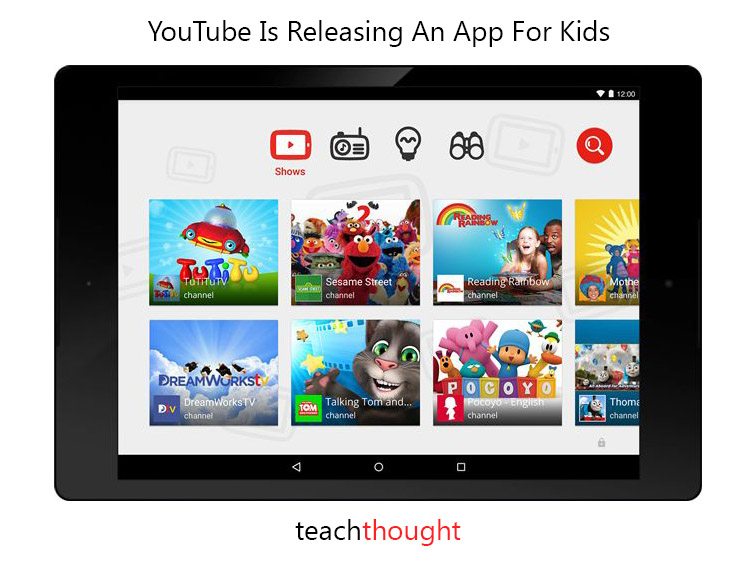
YouTube Is Releasing An App For Kids
by TeachThought Staff
Both USA Today and The Verge are reporting that YouTube will be releasing a first-party app for kids at the Kidscreen Summit event on February 23.
And at least at the beginning, it’s spurning rival-iOS and going Android-only.
It’s not surprising that Google-owned YouTube is releasing an app designed for engagement by those still developing their decision-making skills and capacity for self-restraint. Among the features are removal of comments, safer search, a way to control viewing time, and even original content for children. We’ve long held that YouTube is one of the best-kept secrets in teaching and learning–in lieu of its ample underbelly. There is so much stunning content on YouTube–channels like Tested, Periodic Videos, Veritasium. Numberphile, Minute Physicstimes a billion.
If we loved Smarter Every Day, we’d explode.
In fact, there’s so much great content that it’s easy to miss, especially if you already have your mind made up about the “garbage” on YouTube. (Or more likely, your district blocks it.) Which is what made us so excited about Brainfeed, which we included in our 50 Apps That Clarify New Ways To Learn, and ourBest Educational Apps For 2014. Brainfeed curates some of the better, edu-centered content into channels by content area or topic so you don’t have to bother, which makes it a perfect fit for self-directed learning, problem-based learning, and grab-and-go mini-lessons for your classroom.
The continued evolution of YouTube as an API (versus simple a website) is great to see, but about two years late. There is so much buzz around apps like Zaption and Seesaw that support flipped classrooms and allow teachers to create their own content, all the while neglecting the extraordinary (and often expert-sourced) content already there. YouTube hasn’t limited itself to an easy way to upload videos or embed video content on blogs.
Perhaps this is a sign that Google is finally realizing the extraordinary potential YouTube has above and beyond how it’s been used for the last decade.
We’d guess iOS users can expect a version later this summer. Technology Tidbits Screen Chomp App
ScreenChomp is a free app for creating and sharing short tutorials or lessons on your iPad.
ScreenChomp provides a whiteboard on which you can demonstrate things by drawing
and talking people through your instructions. ScreenChomp records your voice as
you go. When you finish your recording share it to ScreenChomp.com where a shortened URL will be
provided for you to share with anyone you like. This could be a good app to have students use to create and share
short demonstrations of their understanding of a particular topic or concept.
News & Notes
I will contact the Superintendent's Office tomorrow to see if Dr. Avossa still plans to visit Medlock on Wednesday 4/22.
Today I participated in a full day of principal training on Blended Learning. My goal was to remain fully engaged for the entire time and try not to get overwhelmed. I met one out of the two goals. The training was a part of my requirement as a Cohort 1 principal embarking on Personalized Learning. As I conversed with colleagues, I realized that we are doing some extraordinary work here at Medlock. It was wonderful to share how we are approaching our professional development in a differentiated way. I was excited to share how our students are participating in Genius Hour, using a variety of apps for presentation and even coding in grades as young as Kindergarten. The greatest common factor in all of the things that I shared today is.......YOU. You have embraced the idea that we have to teach differently and that students can and should take ownership of their learning. You have decided to take risks in the classroom and become more flexible in how you teach. You have encouraged students to "show what they know" in a variety of ways. You are the reason that our ordinary curriculum is being taught in extraordinary ways. You make the difference at Medlock.
Staff Spotlight
This week I would like to shine the spotlight on Ashley Mason. Ashley has become a "go to" person for classroom coverage. In fact, she has even offered to help us out in tough to cover classrooms or when we are in a bind. Ashley agrees to extra shifts in the cafeteria without complaint. Teachers have commented that they appreciate the way she follows the plans that are left and holds the students accountable. We know how hard it is to get pulled to cover a class at a moment's notice. Ashley thank you for your willingness to support our students and staff everyday.
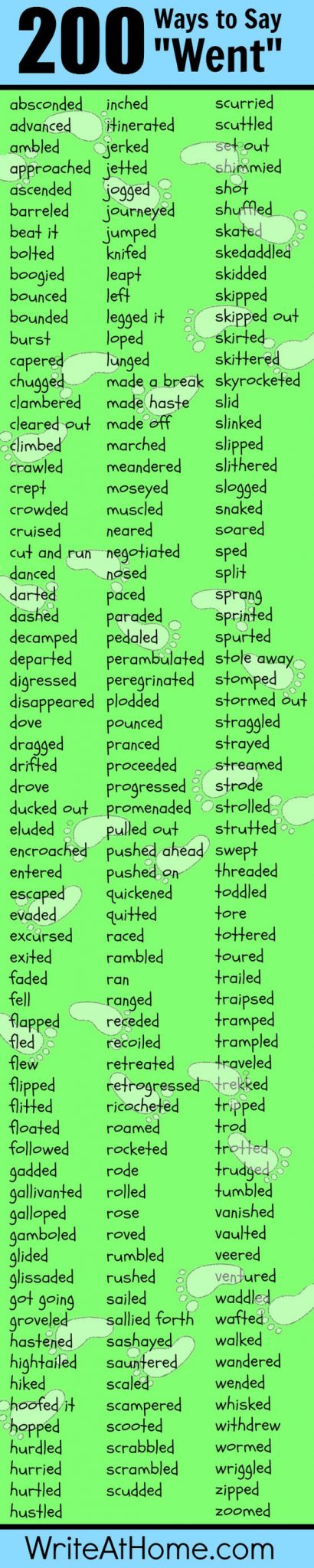
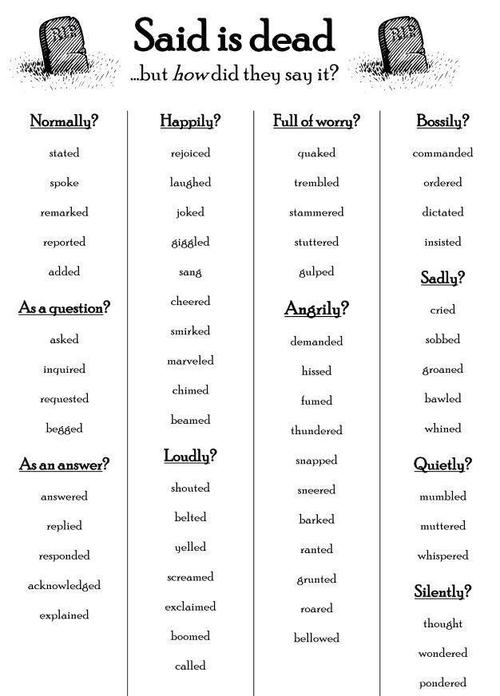
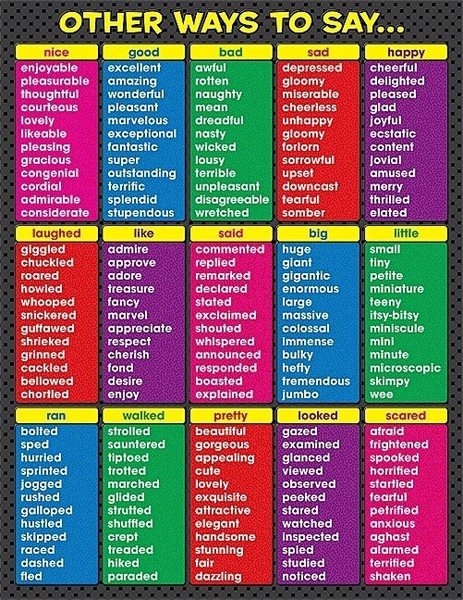
Your students are bright, but they don’t always sound like it.
Their diction is full of cliche and emaciated language that doesn’t reflect their inner voice, nor does it indicate their vocabulary level.
You want your students to use specific language that demonstrates intended meaning rather than the first word that popped into their head, but you want to do more than hand them a thesaurus and tell them to “figure it out.”
While the following graphics aren’t going to make that happen, they can certainly play a role if posted to your classroom blog, shared on a student-teacher pinterest page, hung on a classroom wall, or reformatted, printed, hole-punched, and stored in a student binder.
Dr. Scott Muri, FCS Deputy Superintendent, will be visiting Medlock on May 12th after school to discuss the Personalized Learning Initiative taking place in FCS.